

Story
The weight of the profession: Reporting on mental health while navigating its impact
- Date:
- Source:
- OSCE Mission in Kosovo
After a long day of news reporting and bridging voices and issues, journalists from different media outlets and communities gather in downtown Prishtinë/Priština for a discussion on mental health and the impact of sensitive topics. In the fast pace of the newsroom and the hyper-digital era, this is a topic rarely discussed, yet deeply felt by those within the profession.
Organized by the OSCE Mission in Kosovo and the Association of Journalists of Kosovo (AJK), the discussion almost serves as a group therapy session.
“If journalists do not manage to protect their own mental health, their work will inevitably be affected,” says Bind Skeja, Executive Director of the Center for Information and Social Improvement, setting the tone for open and honest discussions.
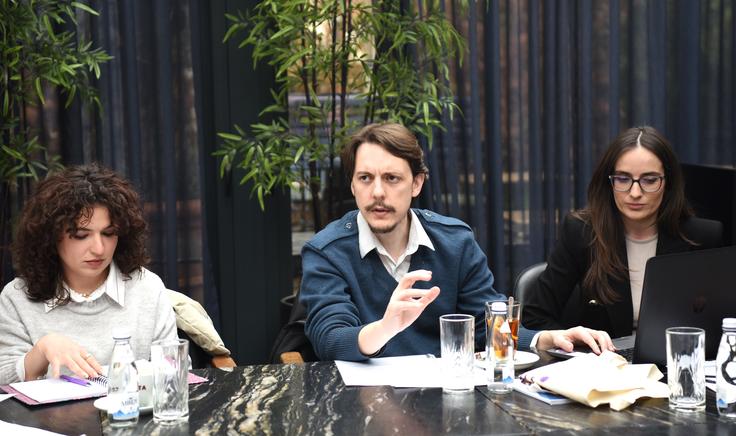
Bind Skeja, Executive Director of the Center for Information and Social Improvement, talks to the participants.
The journalists take a moment to catch their breath as the hosts welcome them but are quick to dive into the reality they know all too well: long hours, constant pressure, and frequent exposure to distressing events.
“We are all reporters here, covering a variety of issues - from a sewage problem one day, to a suicide the next, and a completely different story the day after. There is hardly any profilization in our media,” says Adelina Ahmeti from Kallxo.com. “In all this, how do we maintain empathy and respect - especially for victims? And what do we do when the adrenaline rush of covering unrest for days winds down, leaving room for anxiety and depression?”
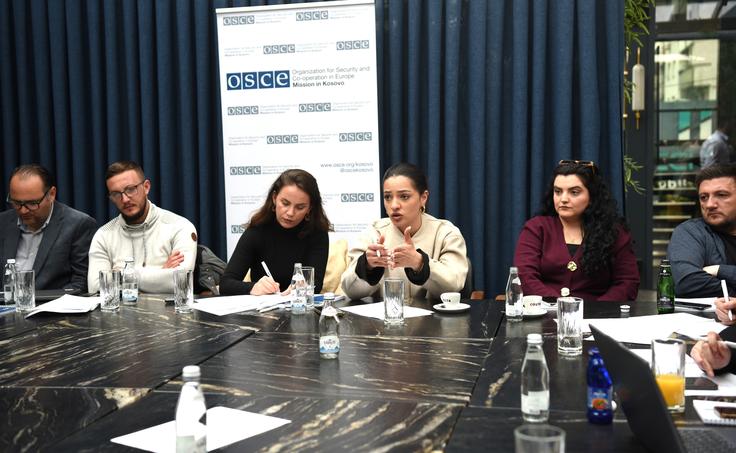
Adelina Ahmeti from Kallxo.com talks about challenges of journalists.
The Media Freedom and Journalists’ Safety Index 2024 report finds that journalists face poor working conditions, burnout, harassment, and overwork, underscoring the need for stronger labor protections, fair newsroom practices, and institutional reforms. The lack of an all-inclusive trade union leaves journalists unprotected, leaving AJK to offer legal aid to journalists facing labour rights’ violation.
The report emphasizes that improving media freedom requires mental health support systems, gender-responsive policies, and a more active role from journalists’ associations in advocating for safer, more inclusive work environments.
“Protecting the well-being of journalists is essential not only for the individuals themselves, but also for the quality and integrity of journalism as a whole,” says Pascale Roussy, Director of the OSCE Mission in Kosovo Democratization Department, emphasizing that creating space for open discussions on mental health is a key step toward reducing stigma and fostering a healthier and more resilient media environment.
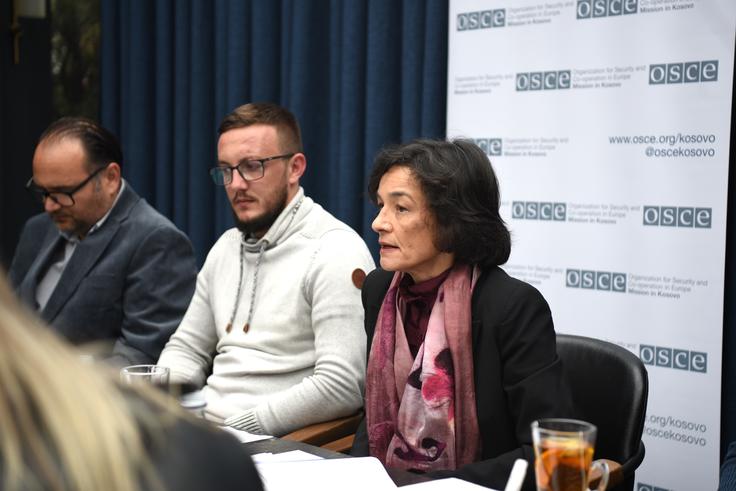
Pascale Roussy, Director of the OSCE Mission in Kosovo Democratization Department, addresses the participants.
Speaking of the emotional toll of the profession, participants also mention a lack of support and often dismissive older colleagues and supervisors, who insist they need to be strong and take the pressure. “The psychological aspect of our work and its impact on us has only recently begun to be taken into account,” says Besarta Hoti from Nacionale.
That’s why, for her as well as for Ahmeti, forums like this are crucial and necessary.
As the day’s discussions progress, Gresa Miftari, Clinical Psychologist at the Center for Information and Social Improvement, offers practical tools to cope with stress and burnout, while also encouraging peer exchange and reflection on the emotional demands of journalism.
Highlighting the responsibility of journalists, Skeja points out that reporting on mental health requires a careful balance: applying the do-no-harm principle while still informing the public. “The reach of social networking today is immense, and how we report matters just as much as what we report,” he says.
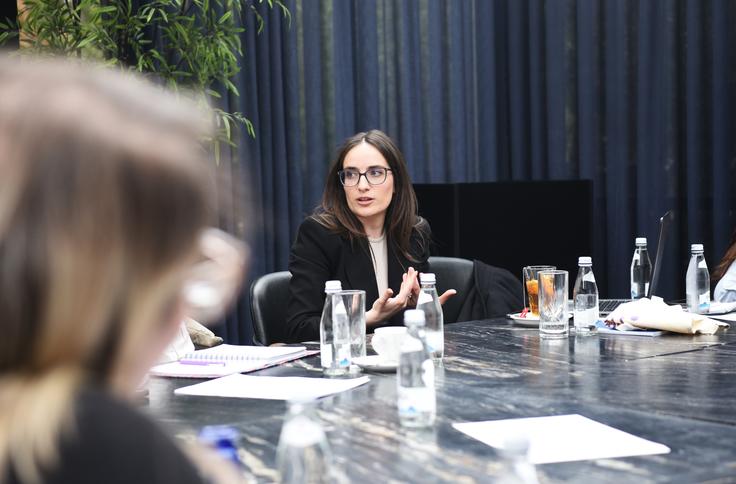
Gresa Miftari, Clinical Psychologist at the Center for Information and Social Improvement, during one of the sessions.
To help journalists maintain this balance and report ethically on mental health, the Centre he represents and the AJK published in 2025 a Guide on Responsible and Ethical Reporting on Mental Health and Suicide. Additionally, a dedicated category for Best Reporting on Mental Health was included in the Annual Journalism Awards of the AJK.
Building on exchanges and reflections, participants will develop recommendations for a second publication focusing on journalists’ mental health and well-being in the newsroom, while five of them will produce stories focusing on mental health.
They all share a clear purpose - equipping journalists with tools to manage work pressures, report with care, responsibility, and humanity, and raise awareness of mental health among a wider audience.
“Mental health is a critical component of a sustainable and professional media sector. Through our partnership with AJK, we are aiming to strengthen support mechanisms within newsrooms and enhance journalists’ access to resources that promote well-being and resilience,” Roussy concludes.

Participants discuss the impact of their work on mental health.
OSCE Impact
Contact
