

Story
Exploring the past, shaping the future: OSCE Mission brings young people to Janjevë/Janjevo to help preserve cultural heritage
- Date:
- Source:
- OSCE Mission in Kosovo
- Focus area:
- Cultural heritage
In Janjevë/Janjevo, every old house and narrow street tells a story of its rich cultural heritage and reminds us why preserving it matters. As a multi-community village with a distinctive Croatian community heritage, Janjevë/Janjevo reflects the traditional architecture and diverse cultural influences that form an important part of the history and cultural heritage of different communities in Kosovo.
To help university students explore the village and develop practical skills in documenting cultural heritage assets, the OSCE Mission organized a five-day Cultural Heritage Youth Camp from 19 to 23 October 2026. The camp was organized in co-operation with the Ministry of Culture and Tourism and the Regional Centre for Cultural Heritage in Prishtinë/Priština, and brought together 11 university students from different backgrounds.
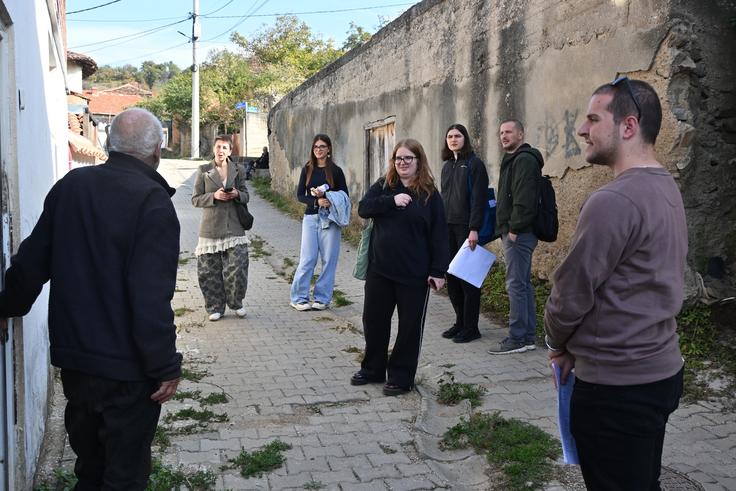
Students speak with a local resident in Janjevë/Janjevo, gathering first-hand accounts and local perspectives to better understand the village’s history, traditions and distinctive cultural heritage. 21 October 2026, Janjevë/Janjevo.
Throughout the programme, participants learned about the history of Janjevë/Janjevo, international standards for cultural heritage documentation, and the different values that make heritage significant, including architectural, aesthetic, historical, social and spiritual dimensions.
Combining theoretical learning with hands-on experience, students put their knowledge into practice through fieldwork, documenting cultural heritage sites in the village. The activities helped them strengthen their understanding of documentation methods and the importance of safeguarding cultural heritage for future generations.
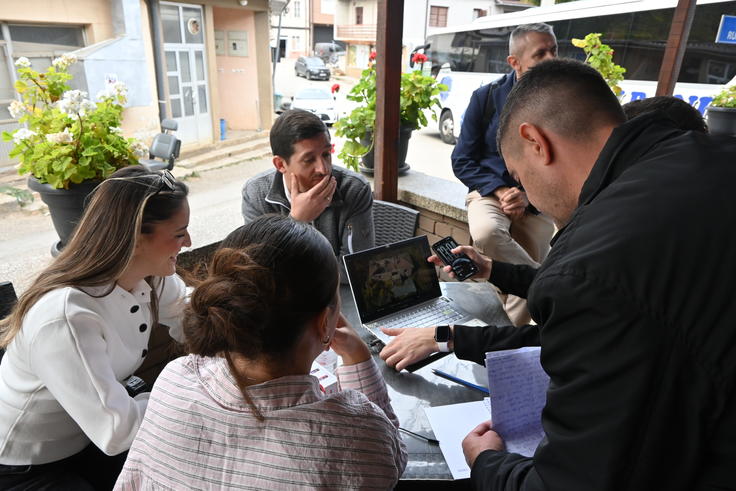
Participants share footage of historic buildings and oral histories collected through conversations with local residents, documenting the area’s architectural heritage and community stories. 21 October 2026, Janjevë/Janjevo.
For Fatlind Kukaj, a third-year Anthropology and Cultural Heritage student at the University of Prishtina, the opportunity to engage directly with residents offered a valuable new perspective.
“Speaking with the locals of Janjevë/Janjevo, I gained insights into their way of life and their vernacular heritage. As anthropologists, we tend to focus on people, but this experience also helped me appreciate the buildings they created and the stories they hold. It was very fulfilling to explore a dimension of cultural heritage that I would not necessarily have considered from my own academic background,” he said.
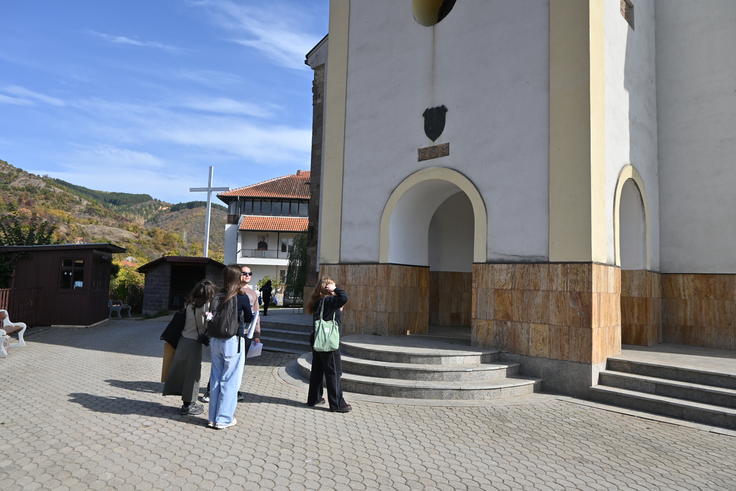
Fatlind joins fellow students on a visit to the Catholic Church in Janjevë/Janjevo, where they explore the village’s religious and architectural heritage and learn more about its historical significance. 21 October 2026, Janjevë/Janjevo.
Born and raised in the United Kingdom, but with personal connections to the region through their family heritage, Trina Hashani and Jelena Sofronijevic joined the camp with enthusiasm to learn more about the history and lived experiences of the village.
For Trina, a recent graduate in Art and Ecology at Nuova Accademia di Belle Arti, Milan, the camp offered an opportunity to discover the village in greater depth and consider how its layered history is reflected in its buildings and community.
“I am passionate about the different layers of history that buildings hold. In Kosovo, these histories are often intertwined, and understanding how buildings were constructed and the cultural context behind them can tell us so much, even when not everything has been documented,” she explained.
She also highlighted the value of learning alongside other students interested in cultural heritage.
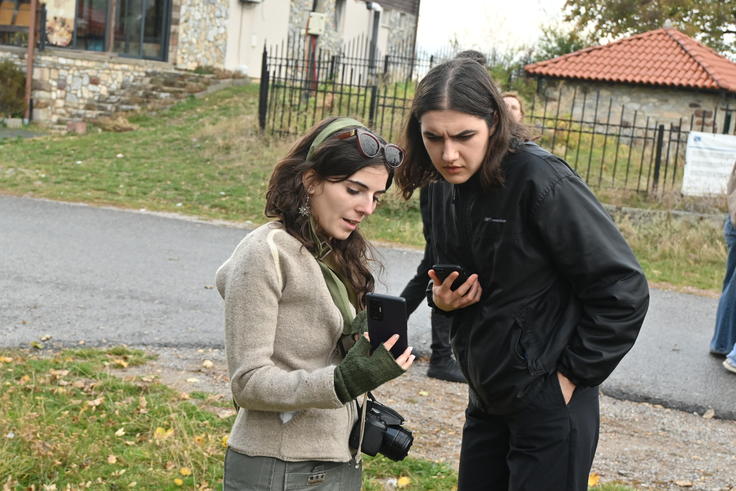
Trina and Jelena share footage captured during the visit, exchanging observations and documenting the cultural heritage they encountered along the way. 21 October 2026, Janjevë/Janjevo.
A PhD student at Gray’s School of Art, Robert Gordon University in Aberdeen, Scotland, Jelena saw the camp as an opportunity to connect her academic and artistic research with the lived experiences of people in Janjevë/Janjevo.
Having researched historical photographic collections in the UK and the work of women anthropologists who studied the region, such as Mary Edith Durham, she saw the camp as an opportunity to deepen her research through direct engagement with the community.
“It was an opportunity to develop my research by connecting with people who live here today, and to explore more deeply my own family heritage. I also valued the opportunity to meet and learn with other people,” she said.
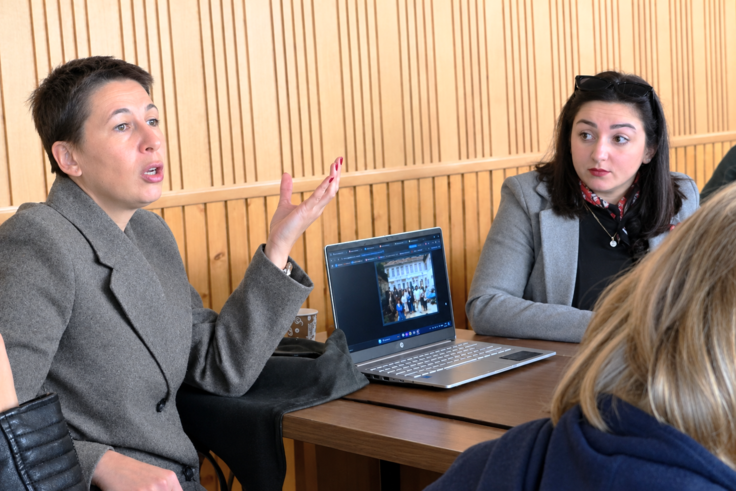
Zana Llonçari, a conservation architect, and Anita Susuri, a researcher at Oral History Kosovo, guide students throughout the camp, sharing their expertise and providing valuable insights into cultural heritage preservation. 21 October 2026, Janjevë/Janjevo.
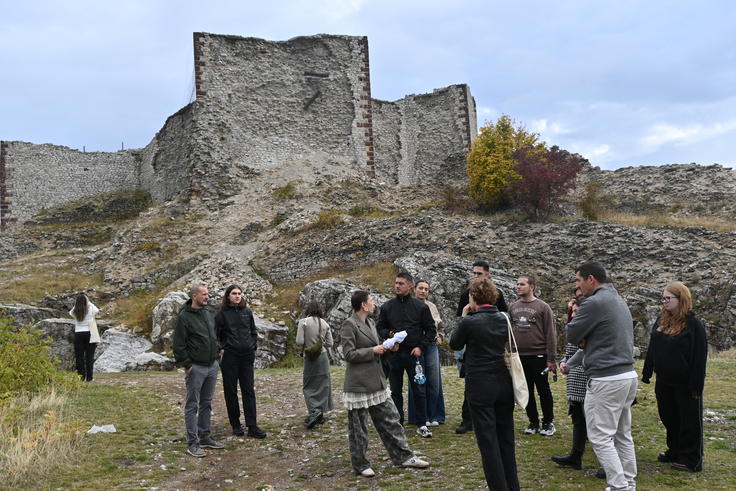
As part of the day’s fieldwork, students visit the Novo Brdo/Novobërdë Fortress to explore its historic structures and learn more about the site’s significance. 21 October 2026, Novo Brdo/Novobërdë.
Since 2018, OSCE youth camps have brought together young people from diverse backgrounds to explore, document and safeguard different cultural heritage across Kosovo. By fostering collaboration among participants with different academic backgrounds, experiences and perspectives, these initiatives promote mutual learning, intercultural dialogue and a deeper appreciation of cultural diversity.
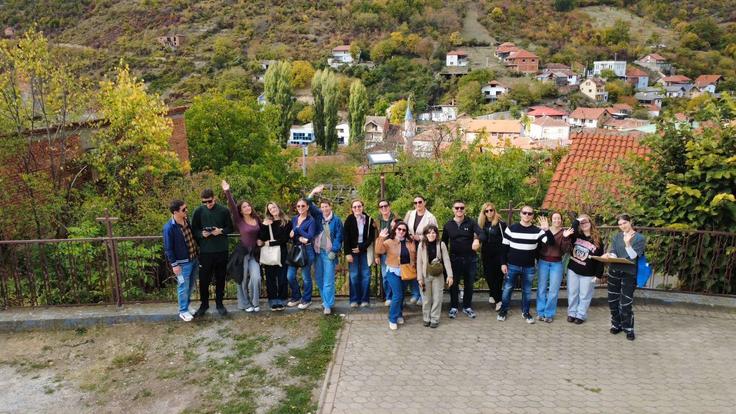
Students and local experts gather for a group photo, celebrating the learning and fieldwork focused on documenting and preserving the village’s rich cultural heritage. 22 October 2026, Janjevë/Janjevo.
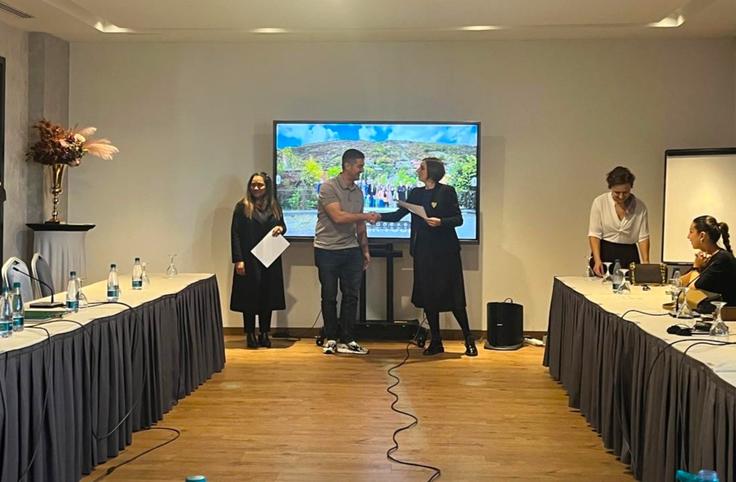
The concluding ceremony featured student presentations, followed by remarks from Nora Arapi-Krasniqi, Deputy Minister of Culture and Tourism, and Kavya Rajan, the OSCE Mission’s Director of Human Rights and Communities. Students also received certificates in recognition of their participation in the camp. 23 October 2026, Prishtinë/Priština.
OSCE Impact
Contact
