

Story
Building Inclusion Through Dialogue: My Journey as an Intern at the OSCE Mission in Kosovo
- Date:
- Source:
- OSCE Mission in Kosovo
- Fields of work:
- Human rights, Youth
- Focus area:
- Human rights and youth
By Valdrina Potoku
When I joined the OSCE Mission in Kosovo as its first Intern on Inclusion of Persons with Disabilities, I didn’t just begin an internship – I started a journey of understanding what inclusion really means. Working on the rights of persons with disabilities became one of the most inspiring and transformative experiences of my professional and personal journey. From the very beginning, I felt part of a Mission that values equality, human rights, and the power of dialogue in creating lasting peace.
Throughout my internship, I was involved in a wide range of activities that brought together diverse communities and institutions across Kosovo. These included consultative meetings with institutional stakeholders, community and religious representatives, workshops with women, youth, and persons with disabilities, and events promoting co-operation between the Kosovo Police and religious communities to prevent security incidents.
Each of these experiences taught me that inclusion is not only about representation - it is about participation, empathy, and respect. Thanks to my internship, I have now secured a position with a local civil society organisation that focuses on disability inclusion, where I can carry forward the lessons that I learned from my time with the OSCE.
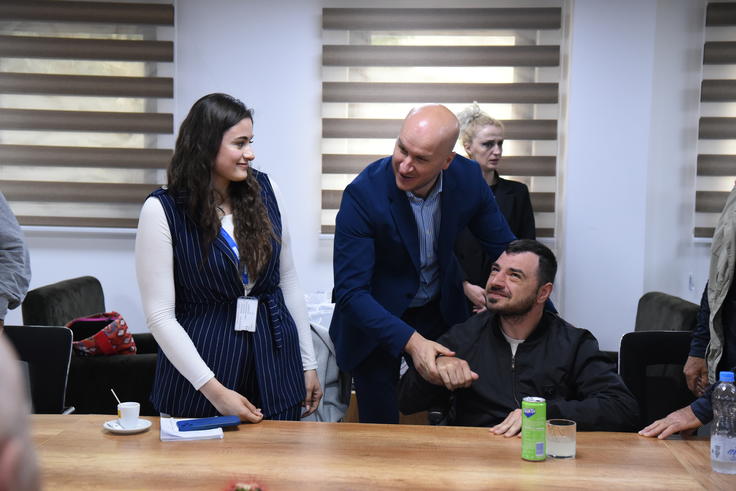
Valdrina, pictured with the Mayor of Shtime/Štimlje, Qemajl Aliu, at an OSCE activity promoting the inclusion of persons with disabilities. May 2025.
Empowering Persons with Disabilities
One of the most meaningful parts of my internship was my engagement in OSCE’s initiatives to empower and promote the inclusion of persons with disabilities. I contributed to the implementation of Shtime/Štimlje’s Strategy and Action Plan for Persons with Disabilities (2025–2028) through an activity that included short internships for five persons with disabilities in various municipal departments, followed by a visit to a private company in Lipjan/Lipljan, which employs a significant number of persons with disabilities. This initiative increased participants’ exposure to employment opportunities and strengthened co-operation between municipalities committed to improving inclusion.
Similarly, I took part in a workshop in Obiliq/Obilić on supporting the municipality’s Strategy and Action Plan for Persons with Disabilities. Through these experiences, I learned about municipal responsibilities, institutional co-ordination, and the importance of ensuring that persons with disabilities have equitable access to services and opportunities within their communities.
Additionally, I participated in a workshop organized by the OSCE that aimed to strengthen the watchdog capacities of civil society organizations advocating for disability rights. The training provided insights into monitoring mechanisms, obligations stemming from the United Nations Convention on the Rights of Persons with Disabilities, practical advocacy tools, and accountability measures essential for advancing the rights and participation of persons with disabilities in Kosovo.
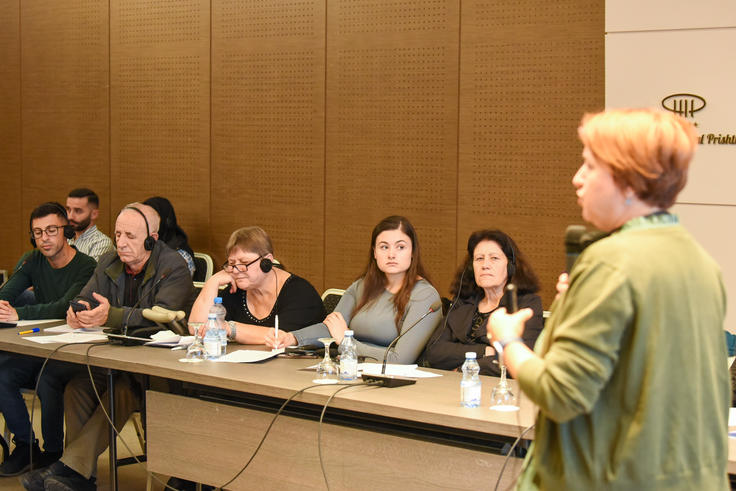
Valdrina at the OSCE workshop on strengthening the watchdog capacities of civil society organizations advocating for disability rights. October 2025.
These experiences were deeply inspiring. They showed me how the OSCE respects and promotes the rights of persons with disabilities not only by giving them a voice, but also by creating real opportunities to participate in public life and demonstrate their talents in both the public and private sectors. Witnessing their motivation and talent reminded me that inclusion means opening doors and creating spaces where everyone can contribute equally.
Expanding my Perspective through Dialogue
Beyond disability inclusion, I was also mentored by Valbone Dermaku, an OSCE expert on interfaith dialogue and prevention of violent extremism and radicalization (VERLT). Valbone taught me all about project management through activities focused on preventing VERLT, non-violent communication, gender-based violence, and domestic violence. Under Valbone’s guidance, I contributed to workshops that empowered women, youth, and persons with disabilities to play an active role in building safer and more resilient communities.
One of the most rewarding moments was facilitating discussions on the role of women in preventing VERLT. Observing how dialogue can bridge divides across ethnic, religious, and social lines reinforced my belief that communication and understanding are very powerful tools. Indeed, these discussions were so compelling that the participants have already held follow-up sessions with relevant local institutions to continue training on preventing VERLT.
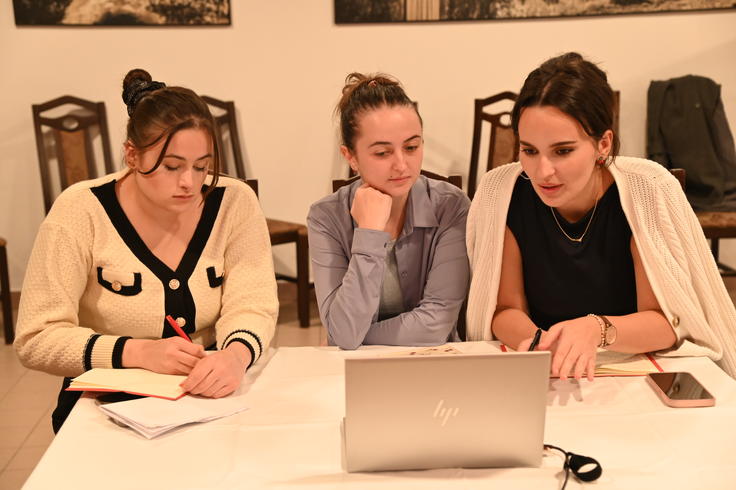
Together with other participants of the 11th Dialogue Academy, Valdrina took part in dialogue-focused sessions, group work, and various tailored discussions. October 2025.
A particularly transformative part of my journey was my participation in the Dialogue Academy for Young Women from Prishtinë/Priština and Belgrade, held in Gorizia/Nova Gorica (Italy/Slovenia). This professional development programme offered me the opportunity to learn about social identity, non-violent communication, negotiation skills, and conflict resolution. Through interactive learning and group reflection, I came to appreciate how constructive dialogue and mutual understanding can foster peace at the community level.
The “iceberg model” we explored during the Academy resonated deeply with me. It reminded me that people’s emotions, experiences, and identities often remain unseen and that true dialogue requires empathy, rather than assumptions.
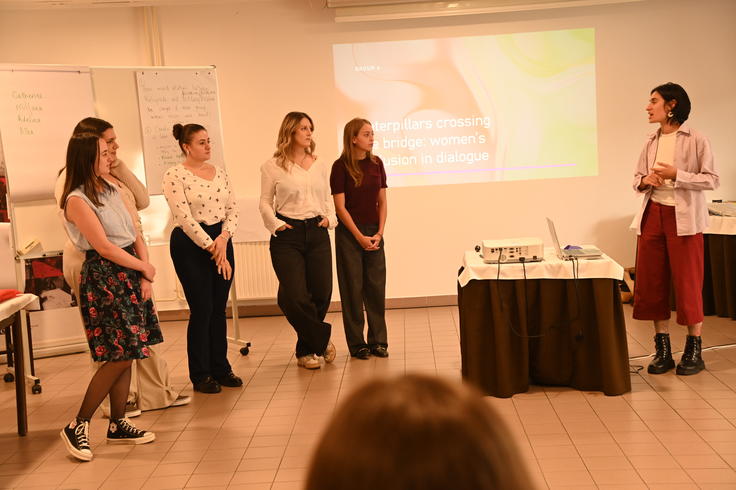
Valdrina with fellow young women from Prishtinë/Priština and Belgrade during a session of the 11th Dialogue Academy. October 2025.
One of the most memorable aspects of this experience was spending time with young women from Belgrade. Despite our different backgrounds and histories, our conversations were open, respectful, and filled with curiosity. We shared personal stories, traditions, humour, and dreams for the future, and I still stay in touch with the friends I made. I realized that, as young people from Southeast Europe, we share far more in common than what divides us, and that bridges of friendship can be built across divides through dialogue and genuine connection.
This was also my first time traveling abroad, which made the experience even more impactful. Seeing new places, cultures, and ways of life broadened my perspective and helped me grow more confident in international settings. It reinforced my belief in the importance of listening, learning, and challenging preconceived notions through dialogue and genuine connection.
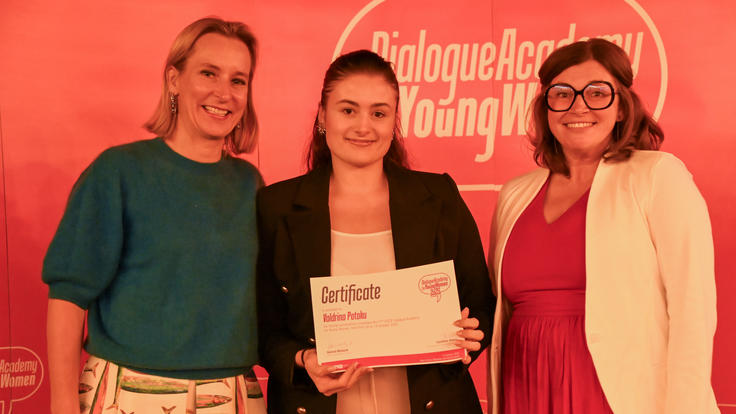
Deputy Head of the OSCE Mission, Cornelia Taylor, presents Valdrina with a certificate of completion following the conclusion of the 11th Dialogue Academy. October 2025.
Working within the OSCE has allowed me to see the direct impact of teamwork, dedication, and inclusion in promoting human rights. I learned that persons with disabilities must be seen not merely as beneficiaries of change but as active contributors to peacebuilding and development.
This internship has strengthened both my professional skills and my personal sense of purpose. It has shown me that change begins with empathy and grows through co-operation.
As I look to the future, I carry with me the belief that even small contributions — a conversation, an idea, or an act of inclusion — can create ripples of positive transformation.
OSCE Impact


Contact
